
Interfacing with the Microchip MCP2515T-I/ST CAN Bus Controller
The Controller Area Network (CAN bus) is a robust vehicle bus standard designed to allow microcontrollers and devices to communicate with each other's applications without a host computer. For many embedded systems engineers, interfacing a standard microcontroller with a CAN network requires a dedicated controller. The Microchip MCP2515T-I/ST is a stand-alone CAN controller that solves this challenge, providing a simple and effective method for adding CAN communication capabilities to any microcontroller with an SPI interface.
Core Architecture and Key Features
The MCP2515T-I/ST is designed to handle the complexities of the CAN protocol, freeing the host microcontroller from this intensive task. Its architecture includes three transmit buffers and two receive buffers, which provide significant flexibility in managing message priority and flow. The device supports both standard (11-bit) and extended (29-bit) identifier frames, making it compatible with a wide range of existing CAN networks.
A critical feature is its integrated acceptance filters. These filters are programmable and can be configured to match specific identifiers, allowing the controller to accept only the messages relevant to the application. This drastically reduces the interrupt load on the host microcontroller, improving overall system efficiency.
The SPI Interface: Bridging to the Host MCU
The primary method of communication between the host microcontroller and the MCP2515T-I/ST is through a Serial Peripheral Interface (SPI). This is a significant advantage as virtually all modern microcontrollers are equipped with an SPI peripheral, making integration straightforward. The host MCU acts as the SPI master, initiating all communications to read status, receive messages, or load messages for transmission into the controller's buffers. This setup effectively turns the complex CAN bus into a simple serial data stream for the application developer.
Typical Application Circuit and Considerations
A complete CAN node requires more than just the MCP2515T-I/ST controller. It needs a CAN transceiver, such as the MCP2551, to interface between the controller's logic-level signals and the differential voltages used on the physical CAN bus. The transceiver handles the critical tasks of bus-level shifting, fault protection, and electromagnetic compatibility.
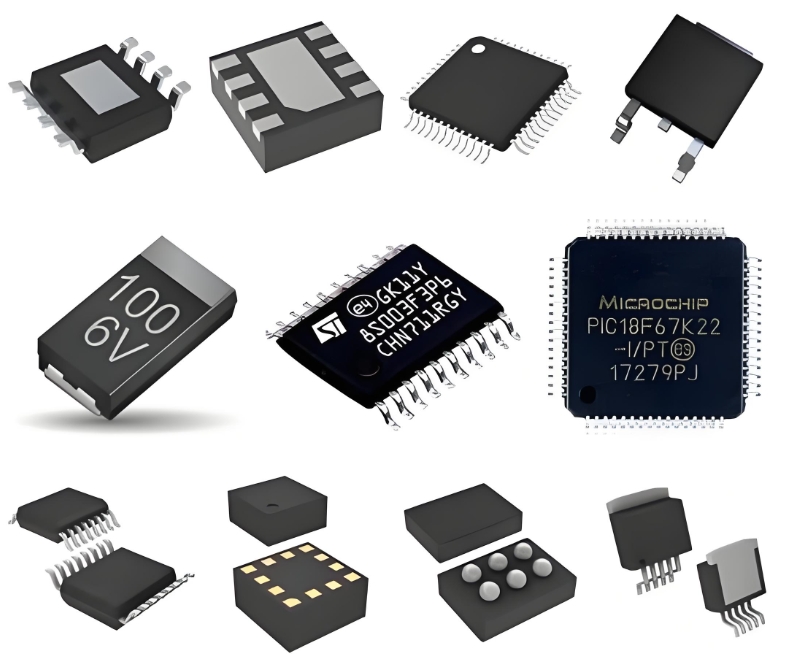
When designing the board layout, careful attention must be paid to decoupling the power supply with capacitors placed close to the controller and transceiver ICs. Furthermore, to ensure signal integrity and minimize electromagnetic interference (EMI), the connection between the controller's TXD/RXD pins and the transceiver should be kept short. A common practice is to include a series resistor on the SPI clock line to dampen signal ringing, especially on boards with longer traces.
Firmware Implementation Overview
The firmware driver for the MCP2515T-I/ST generally involves several key routines:
1. Initialization: Configuring the SPI peripheral of the host MCU and setting the MCP2515's baud rate, operation mode, and acceptance filters.
2. Message Transmission: Loading a message identifier and data into one of the transmit buffers and instructing the controller to send it.
3. Message Reception: Polling or using interrupts to check for received messages. When a message is available, the firmware reads it from the receive buffer via SPI and processes it.
4. Error Handling: Monitoring the controller's error counters and status flags to take corrective action in case of a bus fault.
The Microchip MCP2515T-I/ST stands as an indispensable bridge for microcontrollers lacking a native CAN peripheral. Its reliance on the ubiquitous SPI interface ensures broad compatibility and simplifies development. By offloading the demanding protocol management, it allows developers to focus on application logic, making it a premier choice for creating robust and reliable CAN bus nodes in automotive, industrial, and automation systems.
Keywords
CAN Bus, SPI Interface, MCP2551 Transceiver, Acceptance Filters, Message Buffers

